Vedanta Course Eligibility, Curriculum & How to Apply


Eligibility
Spiritual seekers who are graduates upto 35yrs, regardless of their gender, nationality, upbringing, are carefully interviewed for the residential Vedantic training programme.
Mandatory Requirements for Applicants • Intense desire to study scriptures and live as a spiritual seeker
• English language proficiency (medium of instruction)
• Unmarried status
• Free from family obligations and encumbrances
• Age range: 20 to 35 years
• University graduate with a Bachelor's degree in any field
• Mental and physical fitness for intensive study
Non-discrimination statement: “Gender, caste, creed and nationality are no bar for applying” to the course.
Spiritual seekers who are graduates upto 35yrs, regardless of their gender, nationality, upbringing, are carefully interviewed for the residential Vedantic training programme.
| Mandatory Requirements for Applicants |
| • Intense desire to study scriptures and live as a spiritual seeker |
| • English language proficiency (medium of instruction) |
| • Unmarried status |
| • Free from family obligations and encumbrances |
| • Age range: 20 to 35 years |
| • University graduate with a Bachelor's degree in any field |
| • Mental and physical fitness for intensive study |
Non-discrimination statement: “Gender, caste, creed and nationality are no bar for applying” to the course.
Curriculum
The page describes a two-year intensive Advaita Vedanta programme. “Swami Chinmayananda envisioned a programme of study for the Vedanta Course, with the twin objectives of developing both the head and the heart of the student.”
Samskrit
Students receive instruction in Paninian grammar through exercises and aphorisms. Assessments determine whether students join beginner, intermediate, or advanced levels upon enrollment based on their knowledge of Samskrit.
Vedic Chanting
Training includes traditional recitation of Vedic mantras, Suktams such as Medha Suktam, Shri Suktam, Durga Suktam, Purusha Suktam, Rudram, Chamakam, Shanti Panchakam, the Gayatri Mantra, Taittiriya Upanishad, Mahanarayana Upanishad etc.
Prakarana Granthas (Essential Philosophical Texts) of Advaita Vedanta
Basic level: Tattva Bodha, Bhaja Govindam, Atma Bodha, Upadesha Sara, Sadhana Panchakam
Advanced level: Drg-Drshya Viveka, Vivekachudamani, Vakya Vritti, selected Panchadashi chapters, and others.
Shrimad Bhagavad Gita
The text emphasizes practical application of Upanishadic teachings and covers how to live these principles. All the 18 Chapters are taught verse-by-verse with Shankara-bhashya(Adi Shankara’s commentary).
Upanishads
Major Upanishads: Isha, Kena, Katha, Mundaka, Aitareya, Taittiriya, Prashna, Mandukya with Karika, and Chandogya (chapters 6–8)
Minor texts: Kaivalya, Amrta Bindu
Brahma Sutras
The first four adhikaranas receive detailed study as logical analysis of Upanishadic teachings.
Devotional Texts
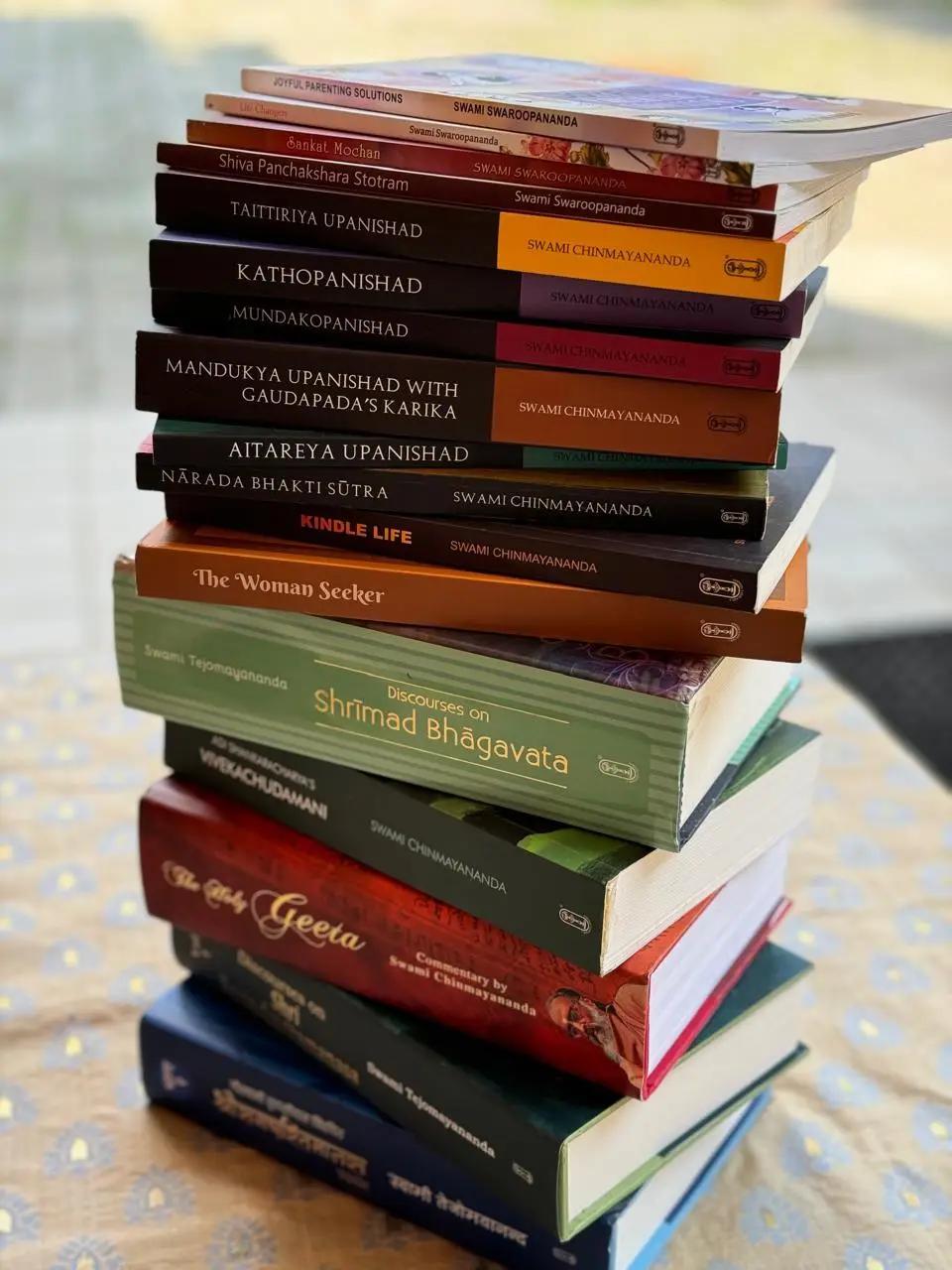
Students study Shrimad Bhagavatam, Ramayana, Narada Bhakti Sutra, Mukunda Mala etc.
Hymns and Chants
Training includes Guru Stotram, Ganesha Pancharatnam, Dakshinamurti Stotram, Vishnu Sahasranam, and others from the Chinmaya Book of Hymns.
Sadhanas
Shodasha-upachara pooja, Japa, Havan, Paduka Pooja, Meditation, Upavas, Mouna, Introspection etc. are the sadhanas which are taught and the students practice regularly.
Leadership & Communication
Training is also given in public speaking, for sharing the knowledge of Vedanta with all age groups, leadership, organizing, team work & missionary work.
The whole exercise of the Vedanta Course is meant for you to change. The whole purpose is for you to use the Knowledge, to become the change you want to see.
Swami Tejomayananda
After the Course
Continuing the Journey of Service and Spiritual Growth.
Primary Path
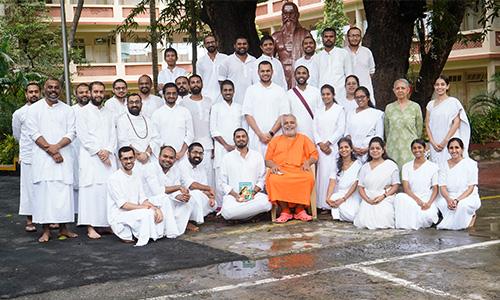
Students completing the course are encouraged to serve full-time at Chinmaya Mission centres wearing white clothes. They may eventually be initiated into Brahmacharya Deeksha(yellow robes) and finally elevated to sannyasa status, wearing ochre robes.
Alternative Path
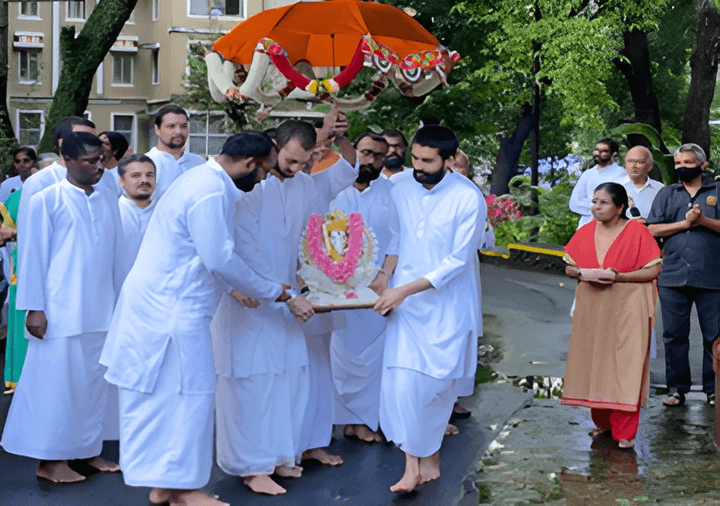
For those uncertain about monastic commitment due to family obligations or other constraints, there is flexibility. This option allows individuals to contribute to the Chinmaya Mission while maintaining personal responsibilities in the family and bridging spiritual and secular life.
Application



Sandeepany Sadhanalaya
Saki Vihar Road, Powai,
Mumbai
Maharashtra, Pin Code : 400072
Ph. - 8976884792
E-mail: sandeepany@chinmayamission.com
Download the app :